

Are Soy Candles Safer Than Paraffin? What to Know
Table of Contents
- Soy Wax vs. Paraffin Wax: How They Differ
- Are Soy Candles Safer Than Paraffin? The Evidence
- Scent Throw: Does Wax Type Actually Matter?
- Are Paraffin Candles Toxic for Pets?
- The Benefits of Soy Wax Candles
- How to Tell If a Candle Is Non-Toxic
- Picking a Candle That Fits Your Home
- Frequently Asked Questions
Last Updated: September 28, 2026
Soy Wax vs. Paraffin Wax: How They Differ
The core difference between soy and paraffin candles comes down to raw material. Soy wax is vegetable-based, derived from soybean oil, while paraffin wax is petroleum-based, refined from crude oil. That single distinction drives nearly every claim you'll read about burn behavior, soot, and scent.
At Wicks & Things LLC, we hand-pour soy wax candles in small batches, so we spend a lot of time thinking about what goes into the wax. But the honest answer to "are soy candles safer than paraffin" is more nuanced than most candle labels admit.
What Is Soy Wax?
Soy wax is a vegetable wax made by hydrogenating soybean oil, which turns a liquid oil into a solid wax at room temperature. It burns at a lower temperature than paraffin, which generally means a slower, cooler burn.
What Is Paraffin Wax?
Paraffin wax is a petroleum-based wax produced as a byproduct of crude oil refining. It's cheap, holds fragrance well, and produces a strong scent throw. That combination is why it dominates the mass-market candle aisle. It also burns hotter and can produce more visible soot when paired with a poor wick.
Are Soy Candles Safer Than Paraffin? The Evidence
Soy candles are generally considered the safer choice, but the wax itself is only part of the story. The bigger variables are wick construction and fragrance additives, not just whether the label says soy or paraffin.
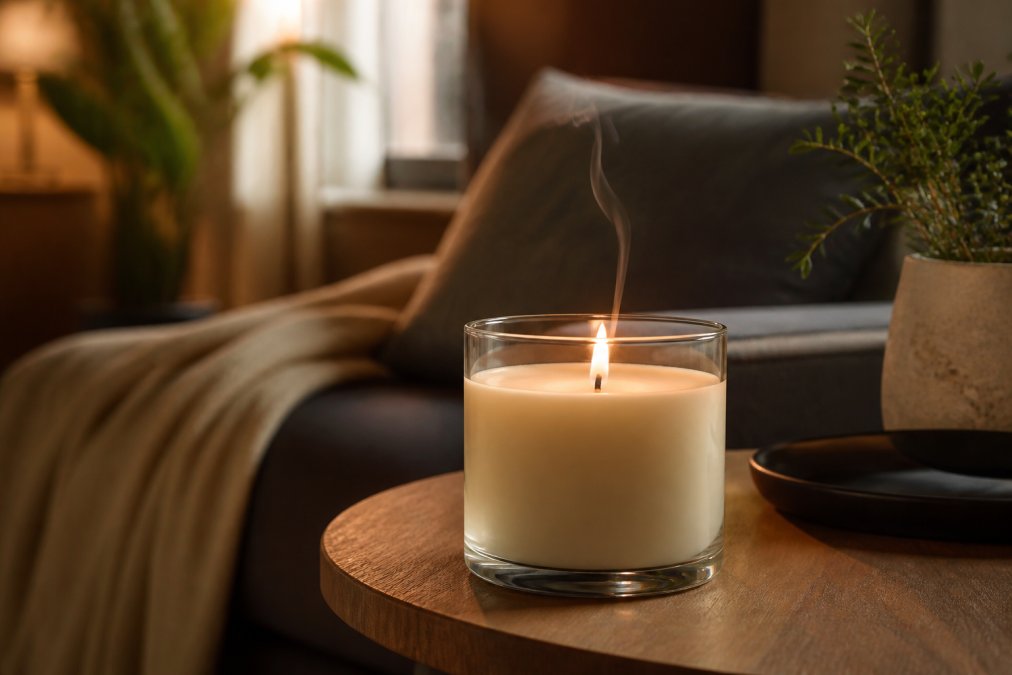
Here's where most comparisons get lazy. They pit soy against paraffin and stop there, ignoring that a poorly made soy candle can produce just as much soot as a cheap paraffin one if the wick is wrong.
Soot, Particulate Matter, and Indoor Air Quality
All candles produce some particulate matter when they burn; it's a product of combustion, not a wax-specific flaw. Paraffin's higher melting point and hotter burn tend to generate more visible soot, especially with a wick that's too long or too large. The EPA's guidance on indoor air quality notes that combustion sources indoors contribute to particulate levels, which is why ventilation and wick maintenance matter more than most shoppers realize.
If you're sensitive to smoke or have asthma triggers in the home, a cleaner-burning candle with a properly trimmed, lead-free wick makes a measurable difference in how a room feels.
Burn Time and Melting Points
Soy wax melts at a lower temperature than paraffin, so it tends to burn more slowly and last longer per ounce. Paraffin's higher melting point gives it a faster, hotter, more intense burn. Neither is "better" in isolation; it depends on whether you want longevity or a quick, strong scent release.
"The scent is beautiful and lasts much longer than I expected.
Scent Throw: Does Wax Type Actually Matter?
Scent throw matters, but wax type is only one factor. A candle's throw depends on fragrance load, wax blend, vessel size, wick size, and room airflow. Paraffin has a reputation for a stronger cold throw, the scent you smell before lighting, because its crystalline structure releases fragrance molecules more readily at room temperature. Soy often performs better as a hot throw once the melt pool forms, especially in a well-made blend.
Fragrance load is the real lever.
Strawberry Macaron & Vanilla – 13.05 oz →
Synthetic Fragrance Oils vs. Essential Oils: The Safety Nuance Most Articles Skip
This is where the soy-vs-paraffin conversation usually falls apart. "Natural" does not automatically mean "safer," and "synthetic" does not automatically mean "toxic." What matters is formulation and dose.
- Synthetic fragrance oils are lab-created blends that can contain dozens of aroma compounds plus solvents and fixatives. They are the industry standard because they are consistent, affordable, and can replicate scents (like "sea salt" or "vanilla bean") that cannot be distilled from a plant. The safety concern is not the word "synthetic", it is the presence of undeclared phthalates, which some fragrance suppliers historically used as fixatives. Phthalates are the additive most often linked to airway irritation and endocrine concerns in consumer products, and many candle makers now market "phthalate-free" fragrance as a result.
- Essential oils are volatile plant extracts. They are not automatically safer to burn. Some, citrus, cinnamon, eucalyptus, tea tree, are potent airway irritants when aerosolized, and a few are toxic to pets even at low concentrations. Essential oils also have a lower flash point in many cases, which can affect how a candle burns and how strongly it throws.
Are Paraffin Candles Toxic for Pets?
There is no confirmed evidence that paraffin wax itself is directly toxic to pets when burned. The real risk comes from three things: combustion byproducts, fragrance additives, and the specific respiratory anatomy of the animal in the room.

Why Birds and Cats Are the Most Vulnerable
Birds have a uniquely efficient respiratory system, air sacs, unidirectional airflow, and a high metabolic rate, that makes them far more sensitive to airborne irritants than mammals of comparable size. Avian veterinarians commonly advise keeping birds out of any room where candles, incense, nonstick cookware, or aerosol sprays are used, because the same particulate and volatile organic compound (VOC) exposure that barely registers for a human can cause acute respiratory distress in a bird.
What Actually Reduces Risk in a Pet Household
- Skip essential-oil-heavy candles if you have cats or birds. Phthalate-free synthetic fragrance at a moderate load is often the lower-risk choice for these species, even though it sounds less "natural."
- Choose a clean-burning wick. A properly sized cotton or paper wick that is trimmed to about 1/4 inch before every burn produces minimal soot. Soot and smoke, not wax chemistry, are what irritate airways.
- Ventilate. Burn in a room with an open window or running exhaust, and never in a closed bedroom with a bird or cat.
- Keep the burn short. Two to three hours at a time is a common guideline; long burns degrade wick performance and increase particulate output.
- Never leave a burning candle unattended, and keep it well out of reach, the more common pet injury from candles is a knocked-over vessel or a singed tail, not toxicity.
If your pet shows coughing, sneezing, eye discharge, or lethargy after a candle is lit, extinguish it, ventilate the room, and call your veterinarian. The wax label is rarely the culprit, the fragrance load and the wick usually are.
The Benefits of Soy Wax Candles
The benefits of soy wax candles go beyond the "eco-friendly" label. Soy is a renewable, vegetable-based wax, it burns cooler and slower, and it produces less visible soot when paired with a proper wick. For anyone building a calmer, cleaner home atmosphere, that combination is hard to beat.
How to Tell If a Candle Is Non-Toxic
A candle is non-toxic when its wax is vegetable-based, its wick is lead-free, and its fragrance is free of phthalates and harsh additives. The label alone won't tell you this, so you have to read the details.
Wick Construction and Fragrance Load
Wick construction is the most overlooked safety factor in the entire candle conversation. A lead-core wick, now banned in the United States, released harmful metal particles when burned (CPSC Bans Candles With Lead-Cored Wicks). Today, most quality makers use cotton or paper-cored wicks.
| What to Check | Safe Sign | Warning Sign |
|---|---|---|
| Wax type | Soy, beeswax, or vegetable blend | Unlabeled "wax blend" |
| Wick | Cotton or paper core, lead-free | Stiff metal wire inside |
| Fragrance | Phthalate-free, moderate load | Overpowering synthetic smell |
| Burn behavior | Even melt pool, minimal soot | Smoking, tunneling, black tips |
Picking a Candle That Fits Your Home
The right candle for your home depends on room size, scent preference, and how sensitive your household is to fragrance. A small apartment needs a lighter throw; an open living room can handle something bolder.
Frequently Asked Questions
What is the safest, healthiest candle to burn?
A candle made with vegetable-based wax, a lead-free cotton wick, and a moderate fragrance load is the safest bet. Soy wax and beeswax produce less soot than petroleum-based paraffin in most home settings, and a well-trimmed wick keeps particulate matter low. No candle is completely emission-free, so always burn in a ventilated room, keep the wick trimmed to about 1/4 inch, and never leave a flame unattended.
Do paraffin candles release harmful chemicals?
Burning any wax produces combustion byproducts, including small amounts of particulate matter and volatile organic compounds (VOCs). Paraffin is petroleum-based, and some studies have measured higher soot and VOC output from paraffin than from soy wax. The bigger variable is often the fragrance oil and wick, not the wax alone. Scented candles with synthetic fragrance or metal-core wicks can add to indoor air quality concerns regardless of wax type.
How does candle soot affect indoor air quality?
Soot from a flickering, untrimmed wick releases fine particulate matter that can linger in indoor air and settle on walls and furniture. People with asthma or allergies may notice irritation sooner. A steady, short flame produces far less soot than a tall, smoking one. Choosing a cleaner-burning wax, trimming the wick before each burn, and keeping the candle out of drafts all reduce soot in a room.
Are soy candles actually better for pets than paraffin?
Soy candles are generally considered a lower-risk choice around pets because they produce less soot and fewer VOCs than paraffin. That said, the fragrance matters more than the wax. Synthetic fragrance, phthalates, and essential oils can all irritate a pet's respiratory tract or skin. Keep candles out of reach, burn them in ventilated rooms, and check with your veterinarian if your pet has asthma or another respiratory condition.
Choosing a safer candle shouldn't feel like a guessing game. Wicks & Things LLC hand-pours every soy candle in small batches, using premium fragrance oils and clean-burning wicks so you get warmth and long-lasting scent without the soot. Explore the full collection and find the scent that fits your home. SHOP NOW
